



Easy Ways To Stop Your Dog From Jumping Over The Fence
Discover practical and effective ways to stop your dog from jumping over the fence. Learn training tips, fence solutions, and behavior strategies to keep your pet safe at home.
For many dog owners, a secure fence feels like peace of mind. It allows dogs to enjoy fresh air and exercise without constant supervision. However, some dogs develop the frustrating habit of jumping over the fence, escaping the yard, and potentially putting themselves in danger. Whether your dog is motivated by curiosity, boredom, or high energy, this behavior can quickly become a serious issue. Not only does it create safety risks, but it may also disturb neighbors or put your pet at risk of getting lost or injured.
The good news is that with the right strategies, consistency, and understanding of why your dog is trying to escape, you can put an end to fence-jumping once and for all. This guide explores practical, humane, and effective solutions to keep your dog safely contained.
Why Dogs Jump Over Fences
Before trying to stop the behavior, it’s important to understand the motivation behind it. Dogs rarely jump fences just for the sake of it—there is usually an underlying reason. Reasons why Dogs Jump over Fences
- Boredom and Lack of Stimulation
Dogs are intelligent, active animals. If they are left alone in the yard with nothing to do, they may seek stimulation elsewhere. Jumping the fence becomes an outlet for energy and curiosity. - Separation Anxiety
Some dogs struggle when left alone. They may jump fences in an attempt to reunite with their owners or relieve their anxiety. - Hunting or Prey Drive
Dogs with strong hunting instincts may leap fences if they see squirrels, cats, or other wildlife on the other side. - Mating Instincts
Unneutered dogs, especially males, may escape in search of a mate. - Territorial Curiosity
Some dogs simply want to explore what lies beyond their boundaries. - Exercise Needs
High-energy breeds such as Border Collies, Huskies, and German Shepherds may jump fences simply because they need more physical and mental activity than the average dog.
Identifying the “why” will help you choose the best solution.

Physical Solutions to Prevent Fence Jumping
1. Increase the Height of Your Fence
If your dog can easily clear your fence, the first logical step is to raise its height. A fence that is at least 6 feet tall is recommended for most medium-to-large breeds. Some agile breeds may even need taller enclosures.
2. Add a Fence Extension or Roller
If raising the fence isn’t practical, you can add a fence topper or roller. A fence roller is a horizontal bar that spins when the dog tries to grab it, making it nearly impossible to climb or jump over. Extensions that angle inward also discourage jumping.
3. Install an Invisible Barrier
Electric or invisible fences placed just inside your existing fence can deter dogs from approaching it. However, this should be used with caution, as some dogs may push through the discomfort if highly motivated. Pair this method with training to avoid stress or fear.
4. Use Landscaping as a Deterrent
Strategic landscaping can make fence-jumping less appealing. Planting dense shrubs, tall hedges, or decorative obstacles near the fence line creates a natural barrier. This not only prevents your dog from gaining a running start but also beautifies your yard.
5. Block Visual Stimuli
Dogs often jump because they see something enticing on the other side. Adding privacy panels, wooden boards, or vinyl slats to your fence removes the visual triggers that tempt them.
Training and Behavioral Strategies
6. Teach the “Stay” and “Leave It” Commands
Basic obedience training is one of the most effective long-term solutions. Consistently reinforcing commands like “stay” or “leave it” when your dog approaches the fence teaches them that boundaries must be respected.
7. Reward Calm Behavior
Rather than waiting for your dog to misbehave, reward them when they are calm inside the yard. Treats, praise, and affection reinforce the idea that staying in the yard is rewarding.
8. Redirect Energy with Toys and Activities
Provide puzzle feeders, chew toys, or interactive play items to keep your dog busy. A mentally stimulated dog is less likely to look for entertainment beyond the fence.
9. Supervised Yard Time
If your dog is a repeat escape artist, avoid leaving them outside unsupervised for long periods. Spend time playing fetch, tug-of-war, or training exercises to make yard time positive and structured.
10. Correct Escape Attempts Safely
If you catch your dog in the act of preparing to jump, redirect them firmly but calmly. Use a leash or call them back with a strong command. Never punish harshly—negative reinforcement may increase anxiety and worsen the problem.

Lifestyle and Exercise Adjustments
11. Increase Daily Exercise
A tired dog is a happy dog. Regular walks, runs, or play sessions can drastically reduce escape attempts. High-energy breeds may require two or more structured exercise sessions daily.
12. Social Interaction and Playdates
Dogs are social creatures. Scheduling regular playdates with other dogs or visiting a dog park provides healthy outlets for energy and curiosity, reducing the urge to escape.
13. Mental Stimulation
Engage your dog’s brain with training drills, scent games, or agility exercises. When their mental needs are met, they are less likely to channel energy into fence-jumping.
14. Address Separation Anxiety
If anxiety is the root cause, gradual desensitization training, leaving toys with your scent, or using calming aids (like pheromone diffusers) can help. In severe cases, consult a veterinarian or professional trainer.
Safety Alternatives to Fencing
15. Outdoor Kennel or Enclosure
For dogs that cannot be trusted in a large yard, a secure outdoor kennel may be a temporary solution. Ensure it’s spacious, shaded, and comfortable.
16. Long Leash or Tethering (Supervised Only)
Attaching your dog to a long leash with supervision gives them room to move without risking escape. Never leave dogs tethered unsupervised, as it can be dangerous.
17. Dog Runs
Installing a cable run across the yard allows your dog to move freely within limits. This provides exercise and safety at the same time.
Professional Help
18. Consult a Dog Trainer
If training on your own proves difficult, a professional trainer can provide tailored strategies for your dog’s specific behavior.
19. Veterinary Evaluation
Sometimes underlying medical issues, such as anxiety disorders or hormonal imbalances, contribute to escape behavior. A vet visit ensures nothing is being overlooked.
20. Doggy Daycare
For owners who are away for long hours, doggy daycare provides stimulation, exercise, and companionship, eliminating the need for escape attempts.
Things You Should Avoid
- Do not use harsh punishments like hitting or yelling. This creates fear, not respect, and may worsen the problem.
- Do not rely solely on shock collars without training, as this can lead to stress and aggression.
- Do not ignore the problem, hoping it will go away. Escaping once can quickly turn into a repeated behavior.
Solutions Explained on how to prevent your dog from jumping the fence
Increase the Height of Your Fence
One of the simplest and most effective ways to prevent fence jumping is to make the fence physically harder to clear. Many standard fences, particularly those around 1.2 to 1.5 meters (4 to 5 feet) high, are no match for athletic or determined dogs. Large breeds such as German Shepherds, Huskies, or even agile medium-sized dogs like Border Collies can easily scale these.
Ideally, a dog-proof fence should be at least 1.8 to 2.1 meters (6 to 7 feet) tall. For particularly strong jumpers, an even taller fence may be necessary. The type of material also matters—chain-link fences, for example, give dogs “footholds” that make climbing easier. A solid wooden or vinyl fence not only adds height but also removes climbing aids and blocks outside distractions that may tempt your dog.
If replacing the entire fence isn’t an option, extensions can be added to increase height without a full rebuild. Popular choices include:
- Vertical extensions: Extra panels that raise the fence’s straight height.
- Angled extensions: Panels angled inward at 45 degrees, making it much harder for dogs to leap over.
- Decorative lattice toppers: These add height while keeping the fence visually appealing.
When increasing fence height, check with local zoning or homeowners’ association rules, as some areas restrict how tall residential fences can be. By choosing the right height and structure, you can effectively reduce your dog’s chance of escaping.
A dog jumping over the fence is more than just an inconvenience—it’s a safety concern that requires immediate attention. By understanding the root cause of the behavior, making physical adjustments to your yard, and focusing on training and exercise, you can create a secure and enjoyable environment for your pet.
Add a Fence Extension or Roller
If raising your entire fence isn’t practical or affordable, adding a fence extension or roller can be an effective alternative. These modifications make it much more difficult for dogs to gain the leverage they need to jump over.
Fence Extensions
Extensions are attachments that can be fitted to the top of your existing fence. They usually angle inward at around 45 degrees, creating a barrier that makes climbing or leaping nearly impossible. Even if your dog manages to get partway up, the inward angle forces them back into the yard. Extensions can be made from wire mesh, lattice, or pre-manufactured kits designed specifically for pets.
Fence Rollers
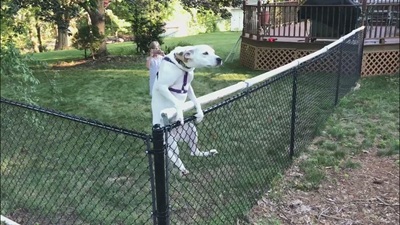
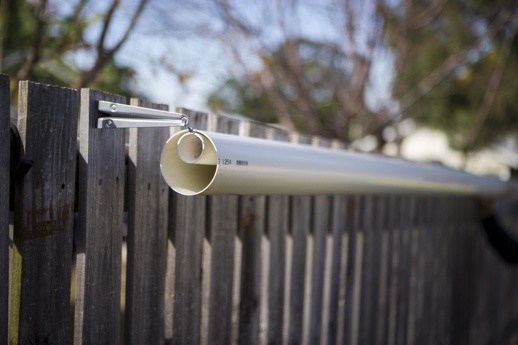
Another clever solution is the use of fence rollers, also known as “coyote rollers.” These are rotating bars that sit along the top of your fence. When a dog tries to grip the top, the roller spins, preventing them from gaining traction. The dog slips back down safely into the yard without ever making it over.
Fence rollers are especially effective for agile jumpers and climbers, and they are also useful for keeping out unwanted wildlife such as raccoons, stray cats, or even coyotes in some regions. They are available in pet-specific designs, or you can create a DIY version using PVC pipes mounted on brackets.
Here is a good example of how effective Rollers are to stop your dog from jumping over the fence.
Benefits of Extensions and Rollers
- They add height without making the fence appear bulky.
- They provide a humane and non-harmful way to contain your dog.
- They can be installed on most existing fences, including wood, vinyl, or chain-link.
- They often comply with local height restrictions since the base fence remains the same height.
By installing fence extensions or rollers, you make your fence “dog-proof” without necessarily needing a costly rebuild. This option is ideal for owners with active breeds or dogs that are natural escape artists.
Install an Invisible Barrier
For dogs that are persistent escape artists, adding an invisible barrier inside your yard can act as an extra layer of security. These systems, often called invisible or wireless fences, work by creating a boundary zone that delivers a mild static correction through a special collar when your dog tries to cross it. While controversial in some circles, when used correctly and combined with training, they can be an effective deterrent.
How It Works
An invisible fence typically uses either buried wires along the fence line or a wireless transmitter that sets up a perimeter. Your dog wears a collar that responds to the boundary signal. As the dog approaches the line, they usually receive an audible warning beep. If they continue forward, the collar emits a gentle static correction to discourage them from going further.
Advantages
- Can be installed without altering the height or appearance of your existing fence.
- Effective in stopping dogs that dig, climb, or jump.
- Works well for properties where local regulations limit fence height.
- Provides additional peace of mind for owners of strong, determined dogs.
Limitations and Considerations
- Not all dogs respond well—some may ignore the discomfort if highly motivated.
- It requires proper training so the dog learns to respect the boundary rather than fear it.
- It should not be used as the sole containment method, especially for anxious or sensitive dogs.
- Power outages or technical malfunctions can render the system ineffective.
Best Practices
If you choose an invisible barrier, always pair it with positive reinforcement training. Teach your dog to recognize and respect the warning beep by guiding them back into the safe zone and rewarding them for compliance. Over time, most dogs learn to stay well within the boundaries without testing them.
Invisible barriers are best viewed as a supplementary tool—not a replacement for a secure physical fence. When combined with solid fencing, they can be an effective solution for persistent fence jumpers.
The key lies in balance: strengthening boundaries while fulfilling your dog’s mental and physical needs. With consistency, patience, and sometimes professional support, you can keep your four-legged friend safe at home where they belong.
Use Landscaping as a Deterrent
Landscaping isn’t just about creating a beautiful yard—it can also serve as a natural and effective barrier against fence-jumping. By designing your outdoor space with strategically placed plants, shrubs, and structures, you can reduce your dog’s ability to approach the fence or gain the momentum needed for a jump.
Dense Shrubs and Hedges
Planting thick, bushy shrubs directly along the fence line can discourage dogs from getting too close. Options like boxwood, holly, or privet hedges create a dense barrier that makes it difficult for dogs to reach the fence without pushing through prickly or obstructive foliage. Not only does this stop them from getting a running start, but it also reduces their visibility of distractions outside the yard.
Raised Garden Beds or Rock Features
Installing raised beds, decorative rocks, or planter boxes near the fence adds an extra obstacle. Dogs that rely on speed to launch themselves over the fence will find it harder to gain momentum. These features also enhance the yard’s appearance, offering both function and style.
Trellises and Climbing Plants
Adding trellises with climbing vines like jasmine, ivy, or bougainvillea can serve as a vertical barrier. Dogs generally avoid pushing through heavy greenery, and the extra texture makes it harder for them to balance or climb. This approach also creates privacy and adds charm to your outdoor space.
Avoid Toxic Plants
When choosing landscaping solutions, always ensure the plants are safe for dogs. Many common garden plants—such as oleander, azalea, or sago palm—are toxic to pets if ingested. Instead, opt for dog-friendly plants like lavender, rosemary, or marigolds.
Additional Benefits
- Reduces visual triggers such as passing people, dogs, or wildlife.
- Creates shade and comfort for your dog within the yard.
- Enhances property value and curb appeal.
- Acts as a secondary barrier in case your fence is compromised.
By incorporating the right landscaping choices, you create an outdoor environment that is not only more attractive but also less tempting for your dog to escape. It’s a win-win solution that improves both aesthetics and safety.
Block Visual Stimuli
For many dogs, the temptation to jump the fence comes not from what’s inside the yard, but from what they can see outside of it. Passing pedestrians, other dogs, cats, bicycles, or even cars can trigger excitement, prey drive, or territorial behavior. By limiting your dog’s line of sight, you reduce the triggers that spark the urge to escape.
Solid Panel Fences
Replacing or reinforcing your fence with solid panels is one of the most effective solutions. Wooden or vinyl fences provide a complete barrier to outside distractions, unlike chain-link or slatted fences that allow dogs to see everything beyond. The lack of visual stimulus often reduces barking, pacing, and jumping behaviors.
Privacy Screens and Slats
If replacing the entire fence isn’t an option, consider adding privacy screens or inserts. Mesh screens, bamboo rolls, or vinyl slats can be attached to existing fences to block visibility. These solutions are affordable, quick to install, and can transform a see-through fence into a solid barrier.
Decorative Panels or Trellises
Another attractive option is to install decorative panels or trellises with climbing plants. Not only does this block your dog’s view, but it also adds greenery and style to your yard. Over time, thick vines create a natural curtain that prevents your dog from spotting potential escape triggers.
Temporary Solutions
For renters or those who cannot modify fences permanently, temporary barriers such as outdoor fabric screens, lattice panels, or even tall outdoor furniture positioned strategically can help block sightlines.
Additional Benefits
- Reduces barking at people, cars, or wildlife.
- Creates a calmer, quieter environment inside your yard.
- Adds privacy for homeowners as well as pets.
- Makes the yard safer by deterring outside animals or strangers from interacting with your dog.
Blocking visual stimuli works hand-in-hand with other solutions like landscaping and fence extensions. By removing the outside “excitement factor,” you give your dog fewer reasons to test the boundaries of the yard.
FAQs
1. What is the best height for a fence to stop a dog from jumping?
Most dogs are contained by a 6-foot fence, though some athletic breeds may require 7–8 feet or angled extensions.
2. Are invisible fences effective for preventing fence jumping?
They can help but should always be paired with proper training. Some determined dogs may push through the mild shock if highly motivated.
3. How can I stop my small dog from squeezing under or through fences instead of jumping?
Reinforce the bottom with chicken wire, lattice, or dig guards to prevent crawling underneath or slipping through gaps.
4. Will neutering my dog stop fence jumping?
Neutering can reduce mating-related escape attempts, but it won’t solve other causes such as boredom or anxiety.
5. Can professional training completely stop fence-jumping?
Yes, with consistent training and owner participation, most dogs can be taught to respect boundaries and stay safely inside the yard.
Easy Ways To Stop Your Dog From Jumping Over The Fence