


The Invisible Tricks Retailers Use to Influence Your Spending
Shopping might feel like a simple exchange of money for goods, but behind every purchase is a carefully designed strategy. Retailers have spent decades perfecting ways to influence your decisions without you even realizing it. From the way stores are laid out to the prices you see on tags, subtle psychological tricks shape what, when, and how much you buy. Understanding these tactics can help you shop smarter, resist unnecessary spending, and keep control of your wallet.
The Science of Retail Psychology
Retail psychology is a branch of consumer behavior research focused on understanding how people make purchasing decisions. Retailers know that shopping is not purely logical; it is emotional, sensory, and often impulsive. By shaping the shopping environment, they can subtly guide customers toward spending more.
Everything from background music to product placement is designed to create an environment that encourages longer browsing times and higher spending. Even seemingly harmless design choices often have hidden motives.
Store Layouts That Guide Your Path
Most retail stores are designed to control the flow of foot traffic. The goal is to expose customers to as many products as possible.
- The Decompression Zone: The area just inside the entrance is intentionally open and uncluttered to give shoppers a moment to adjust. After this, carefully curated displays catch your eye.
- Right-Turn Bias: Many shoppers instinctively turn right upon entering. Retailers position high-margin items in these areas to maximise visibility.
- Product Placement Strategies: Essentials like milk and bread are often located at the back of grocery stores so shoppers must walk past tempting items to reach them.
The Power of Visual Merchandising
Retailers use colour, lighting, and display techniques to influence buying behaviour.
- Colour Psychology: Bright red signs signal urgency and encourage quick decisions, while blue tones create a sense of trust and calm.
- Eye-Level Equals Buy-Level: Products placed at eye level sell better. Premium brands often pay for these spots, while cheaper alternatives are placed lower or higher on the shelves.
- The Rule of Three: Grouping products in threes makes them visually appealing and increases perceived value.
Visual merchandising is designed to make products irresistible, nudging customers toward purchases they did not initially plan to make.
Pricing Strategies That Trick Your Brain
The prices you see are often engineered to feel lower than they actually are.
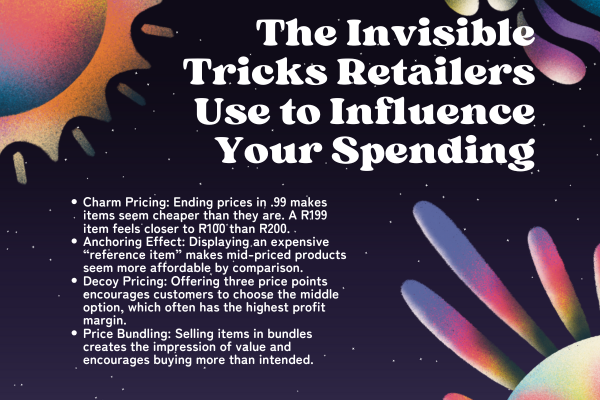
- Charm Pricing: Ending prices in .99 makes items seem cheaper than they are. A R199 item feels closer to R100 than R200.
- Anchoring Effect: Displaying an expensive “reference item” makes mid-priced products seem more affordable by comparison.
- Decoy Pricing: Offering three price points encourages customers to choose the middle option, which often has the highest profit margin.
- Price Bundling: Selling items in bundles creates the impression of value and encourages buying more than intended.
The Invisible Tricks Retailers Use to Influence Your Spending
Music and Scent as Subtle Influencers
Retail environments often appeal to the senses to create a specific mood.
- Music Tempo: Slow music encourages leisurely browsing, increasing the likelihood of impulse purchases. Fast music, on the other hand, speeds up shopping in environments like quick-service restaurants.
- Scent Marketing: Pleasant scents can evoke emotions and memories, influencing both mood and spending. For example, the smell of freshly baked bread in supermarkets is often artificial and used to stimulate appetite.
By engaging your senses, retailers make the shopping experience more enjoyable and encourage you to linger—and spend more.
Loyalty Programmes That Keep You Coming Back
Customer loyalty programmes are designed to build a habit of returning to the same store.
- Reward Systems: Earning points or discounts feels like gaining free value, even if the rewards require significant spending.
- Progress Illusion: Starting customers with “bonus points” makes them feel closer to a reward, increasing engagement and repeat visits.
- Data Collection: Loyalty cards provide retailers with valuable data on shopping habits, allowing for even more personalised marketing.
Scarcity and Urgency Tactics
Creating a sense of urgency or scarcity can lead to impulse buying.
- Limited-Time Offers: Countdown timers and flash sales exploit the fear of missing out, pushing customers to make quick decisions.
- Low Stock Warnings: “Only 2 left” messages encourage immediate action, even if the item was not originally on your shopping list.
- Seasonal Exclusivity: Limited-edition products or holiday-themed items play on scarcity, prompting buyers to purchase before they are gone.
These tactics make shoppers feel they must act immediately, bypassing rational decision-making.
Personalisation and Data-Driven Targeting
Modern retailers use customer data to create highly personalised shopping experiences.
- Targeted Recommendations: Online stores analyse browsing and purchase history to suggest items you are most likely to buy.
- Retargeting Ads: Products you viewed online follow you across websites, reinforcing the desire to buy.
- Dynamic Pricing: Some retailers adjust prices based on demand, browsing history, or location to maximise profits.
Personalisation makes shopping feel more convenient while subtly guiding customers toward additional purchases.
The Role of Freebies and Samples
Offering free samples or small gifts makes customers feel indebted to the store, a psychological principle known as reciprocity. Shoppers often return the favour by making a purchase.
Sampling also reduces perceived risk. Trying a product before buying it builds confidence and increases the likelihood of a sale.
How to Outsmart Retail Tricks
Understanding these tactics is the first step toward making more intentional purchases.
- Shop with a List: A clear plan reduces the chance of impulse buying.
- Set a Time Limit: Spending less time in stores reduces exposure to marketing tactics.
- Be Aware of Pricing Tricks: Round up prices in your mind to assess their real impact on your budget.
- Avoid Shopping When Emotional: Stress, boredom, or excitement can cloud judgment and lead to unnecessary spending.
The Invisible Tricks Retailers Use to Influence Your Spending
Retailers have mastered the art of subtle influence. From store layouts to loyalty programmes, every detail is designed to encourage spending. While these tactics are not inherently negative—they create enjoyable shopping experiences—they can lead to overspending if left unchecked. Becoming aware of these invisible tricks empowers consumers to shop with intention, protecting both their budgets and their peace of mind.
Also see:
Frequently Asked Questions about The Invisible Tricks Retailers Use to Influence Your Spending
What are invisible retail tricks?
They are subtle psychological strategies retailers use to influence purchasing decisions, such as store layouts, pricing tactics, and sensory cues.
Why do stores use these tricks?
Retailers aim to create enjoyable shopping experiences while increasing sales and customer loyalty.
How can I avoid falling for these tactics?
Shop with a list, set budgets, and stay aware of common marketing strategies to make informed decisions.
Do online stores use the same tricks as physical retailers?
Yes. Online stores use tactics such as personalised recommendations, scarcity messages, and dynamic pricing to encourage spending.
Are these retail tactics unethical?
Not necessarily. Most are designed to enhance shopping experiences, but awareness is key to avoiding unnecessary overspending.
The Invisible Tricks Retailers Use to Influence Your Spending