


South Africa G20 Summit 2025 Overview
Marks a Historic First for the African Continent
In a landmark moment for both South Africa and the African continent, Johannesburg will host the G20 Leaders’ Summit on 22–23 November 2025. This will be the first time in history that the G20 summit is held on African soil. South Africa took over the presidency of the G20 on 1 December 2024, and the country has since been preparing to take center stage in one of the world’s most significant global policy gatherings.
What is the G20 Summit?
The G20 Summit is an annual meeting of the Group of Twenty (G20), a forum of the world’s largest economies. It brings together leaders from 19 countries and the European Union to discuss and coordinate international economic policy, financial stability, climate change, sustainable development, and other global challenges.
Key Facts about the G20 Summit:
- Members: Argentina, Australia, Brazil, Canada, China, France, Germany, India, Indonesia, Italy, Japan, Mexico, Russia, Saudi Arabia, South Africa, South Korea, Turkey, the United Kingdom, the United States, and the European Union.
- Representation: Together, G20 members represent:
- Over 80% of global GDP
- Around 75% of international trade
- About two-thirds of the world’s population
- Purpose:
- Promote global financial stability
- Coordinate fiscal and monetary policy
- Address major issues such as climate action, pandemics, debt relief, and digital transformation
- Origins: Started in 1999 as a meeting of finance ministers and central bank governors after the Asian financial crisis. It became a leader-level summit in 2008 in response to the global financial crisis.
- Rotating Presidency: The G20 presidency rotates annually. The host country sets the summit agenda and organizes ministerial meetings throughout the year.
- Recent Hosts:
- 2023: India
- 2024: Brazil
- 2025: South Africa
Typical Agenda Items:
- Global economic outlook
- Trade and investment
- Climate and energy
- Healthcare (especially during pandemics)
- Innovation and digital economy
- Geopolitical tensions affecting the global economy
Why It Matters:
The G20 Summit does not have formal decision-making powers or a permanent secretariat, but it wields major influence. Its decisions and statements often shape the policies of international institutions like the IMF, World Bank, and World Trade Organization, and guide national policy directions.
The Significance of Hosting the G20
The Group of Twenty (G20) includes the world’s largest economies, responsible for more than 80 percent of global GDP and 75 percent of international trade. For South Africa, hosting the summit is not only a diplomatic milestone but a strategic opportunity to advance the continent’s interests on the world stage.
By hosting the G20, South Africa aims to:
- Elevate the development agenda of Africa.
- Advocate for fairer global trade and financial systems.
- Strengthen global cooperation in tackling inequality and climate challenges.
The selection of Johannesburg as the host city was based on its superior infrastructure, international airport capacity, hotel accommodation availability, and readiness to handle a high-level diplomatic event of this magnitude.
2025 G20 Theme and Agenda
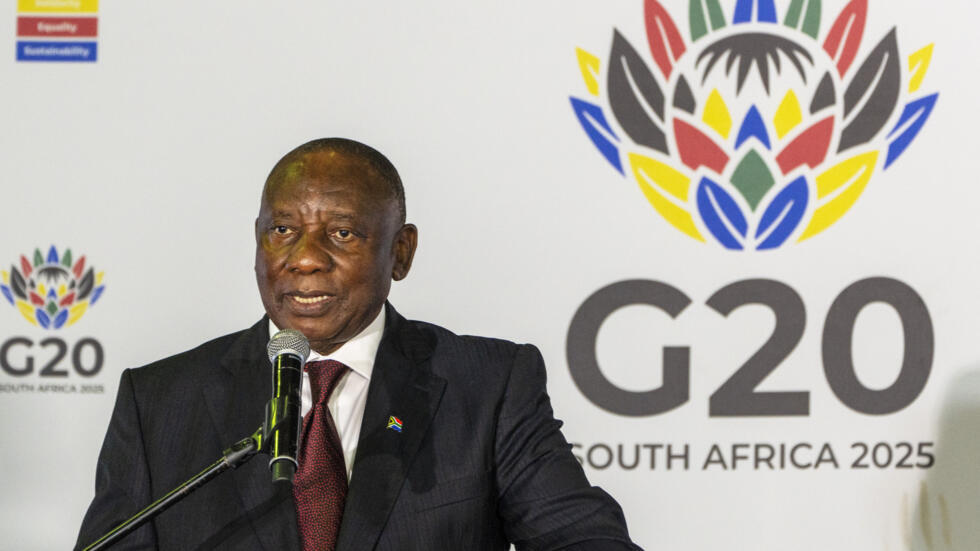
The overarching theme for the 2025 summit is “Solidarity, Equality, Sustainability.” This reflects South Africa’s commitment to building an inclusive global economy that prioritises human development, fair growth, and climate resilience.
Key agenda items will include:
1. Inclusive Economic Growth
South Africa will push for global cooperation to address economic inequality, particularly in the Global South. Topics such as job creation, industrial development, and improved access to technology for developing nations will be central.
2. Global Debt Relief
The summit will provide a platform for continued advocacy around restructuring sovereign debt and promoting more sustainable lending practices, especially in vulnerable African economies.
3. Food Security and Agriculture
Food insecurity remains one of the most pressing global challenges. South Africa intends to drive dialogue on building resilient agricultural systems and food value chains, especially in regions most affected by climate volatility.
4. Climate Action and Just Energy Transition
The G20 will explore deeper commitments to climate change mitigation and adaptation. South Africa’s own journey with its Just Energy Transition Investment Plan will likely be used as a model for other nations balancing development and environmental priorities.
5. Technology and Innovation
South Africa wants the G20 to focus on bridging the digital divide and fostering innovation that supports sustainable development, education, and healthcare.
African Voice in Global Governance
A critical goal of South Africa’s presidency is to institutionalise greater African participation in global decision-making. South Africa will work to ensure that:
- The African Union maintains a permanent seat at G20 tables.
- African development financing is enhanced through multilateral institutions.
- The continent’s unique challenges and opportunities are integrated into global frameworks.
Security and Logistics
South Africa’s security services are collaborating with international partners to ensure that the summit is secure, well-managed, and seamless. The event is expected to bring in thousands of delegates, including heads of state, ministers, CEOs, academics, and civil society representatives.
Advanced digital infrastructure, reliable power backup systems, and transportation logistics are being finalised to meet international standards.
Economic and Tourism Impact
The summit is expected to significantly boost local tourism, hospitality, and business sectors. Johannesburg’s selection also aims to demonstrate the city’s capability as a world-class event destination.
Additionally, pre-summit meetings held throughout the year across various South African cities are expected to draw tens of thousands of visitors, creating jobs and economic activity.
A Platform for the Future
The 2025 G20 Summit is not just a two-day event but the culmination of a year-long presidency that allows South Africa to shape the global agenda. It is an opportunity for the country to:
- Build long-term diplomatic relationships.
- Present its economic reform agenda.
- Champion pan-African solidarity and cooperation.
South Africa’s hosting of the G20 Summit is a moment of pride, responsibility, and global leadership. It represents an opportunity for Africa to assert itself as a vital player in shaping the future of the global economy. With careful planning and strategic diplomacy, South Africa’s presidency could leave a lasting legacy—not just for the G20, but for the developing world.
How will this Impact on Workers and Their Families in South Africa
The G20 Summit’s outcomes can have significant indirect impacts on workers and their families in South Africa, especially given South Africa’s role as the only African member of the G20. Here’s how these impacts might unfold:
1. Economic Growth and Investment Opportunities
- Positive Impact: If the G20 agrees on global measures to stabilize markets, reduce inflation, and promote growth, South Africa could benefit from increased investor confidence, more foreign direct investment (FDI), and better trade conditions.
- Impact on Workers: More investment can lead to job creation, particularly in infrastructure, manufacturing, and green economy sectors.
2. Focus on Sustainable Development and Climate Financing
- Positive Impact: The G20 often commits to climate financing for developing countries. If South Africa receives support for its Just Energy Transition, it can create green jobs, retrain coal and mining workers, and boost renewable energy industries.
- Impact on Families: Safer jobs in clean energy and reduced pollution can improve health outcomes and long-term livelihoods.
3. Digital and Technological Innovation
- Positive Impact: G20 discussions often highlight digital inclusion, AI regulation, and global tech infrastructure. This can open up new sectors in South Africa like fintech, e-learning, and online services.
- Impact on Workers: With proper skills training, South African workers could access better-paying tech jobs.
- Challenge: Without adequate training and internet access, low-skilled workers risk being left behind.
4. Job Security and Labour Rights
- Mixed Impact: If global trends discussed at the G20 push for more flexible labour markets (e.g., gig economy), it may create jobs but also threaten job security, benefits, and pensions.
- Impact on Families: Families could face instability if more jobs become short-term or unregulated, unless South Africa strengthens worker protections.
5. Global Food and Fuel Prices
- Impact from G20 Coordination: G20 action to stabilize food supply chains or oil markets could reduce price volatility.
- Impact on Families: Lower fuel and food prices would ease cost-of-living pressures on South African households.
6. Debt Relief and Public Spending
- If G20 supports debt relief for low and middle-income countries like South Africa, the government may have more fiscal space to invest in:
- Social grants
- Education and healthcare
- Infrastructure
- Impact on Families: This can improve quality of life for lower-income families, especially those dependent on state services.
7. Trade Policies
- If trade barriers are reduced, South African exports (like agricultural goods, metals, wine, and manufactured products) could gain better access to global markets.
- Impact on Workers: This can protect or expand employment in export-driven sectors like farming, auto manufacturing, and mining.
While the G20 Summit may seem distant to everyday South Africans, its decisions filter down through international agreements, development programs, and economic shifts that affect workers and families directly. Whether through:
- More jobs
- Skills development
- Lower food and fuel prices
- Or climate financing,
the impact can be either empowering or disruptive—depending on how well South Africa responds and adapts.
How G20 Decisions Shape South Africa’s Economy
The broader economic consequences of the G20 Summit—especially for South Africa—are both strategic and long-term. As a global forum where major economies coordinate economic and financial policies, decisions made at the G20 often ripple through international markets, national budgets, and everyday economic realities. Here’s how these broader consequences play out:
1. Global Market Stability and Investor Confidence
Consequence:
When the G20 reaches consensus on managing global financial risks (e.g., inflation, banking crises, or geopolitical shocks), it reduces uncertainty.
Impact on South Africa:
- Increased investor confidence in emerging markets like South Africa.
- Strengthened rand value through market stability.
- Potential for lower borrowing costs, easing pressure on government debt.
2. Policy Alignment and Fiscal Discipline
Consequence:
G20 agreements often encourage member countries to adopt sound fiscal policies, improve transparency, and manage debt sustainably.
Impact on South Africa:
- Pressure to reduce fiscal deficits and demonstrate economic discipline.
- Could limit populist spending, but also improve long-term credit ratings.
- Encourages reform of state-owned enterprises and better tax administration.
3. Structural Economic Reforms
Consequence:
G20 recommendations may push countries toward reforms in areas like labour markets, trade liberalization, and infrastructure development.
Impact on South Africa:
- Could lead to labour law adjustments, pension reform, and public sector restructuring.
- Opportunity to attract global funding for energy and digital infrastructure.
- However, resistance from unions or political parties could stall reform momentum.
4. Inclusion in Global Value Chains
Consequence:
Initiatives like reshoring, nearshoring, and reconfiguring supply chains—common topics at the G20—affect where countries fit into the global economy.
Impact on South Africa:
- Possibility to become a strategic manufacturing or logistics hub for Africa.
- Requires investment in infrastructure, energy stability, and logistics efficiency.
- Potential rise in export-driven growth if trade becomes more equitable.
5. Digital Economy and AI Regulation
Consequence:
The G20 increasingly focuses on global standards for artificial intelligence, data privacy, and digital taxation.
Impact on South Africa:
- Pressure to align with global digital rules and improve internet infrastructure.
- Digital startups could gain easier access to international markets.
- Tax policies may shift to target tech multinationals, affecting government revenue.
6. Climate Policy and Green Transition
Consequence:
The G20 sets priorities for carbon neutrality, green finance, and fossil fuel phase-outs.
Impact on South Africa:
- As a coal-heavy economy, South Africa faces transition costs, job losses in mining, and pressure to decarbonize.
- On the upside, it may unlock climate funding, such as the Just Energy Transition Partnership.
- Shift toward green industries (solar, wind, hydrogen) could create new economic sectors.
7. Multilateral Financing and Development Aid
Consequence:
G20 often mobilizes global financial institutions like the IMF, World Bank, and BRICS Bank to provide support packages or emergency financing.
Impact on South Africa:
- Greater access to low-interest loans, development grants, or debt restructuring.
- Can stabilize the economy during crises like pandemics or commodity shocks.
- Supports social programs, infrastructure, and education initiatives.
8. Geopolitical Realignments and Trade Tensions
The G20 reflects changing alliances—such as tensions between the West and BRICS, or disputes over Russia and China’s global role.
Impact on South Africa:
- South Africa may need to balance competing interests between Western economies and BRICS allies.
- Could benefit from non-aligned positioning, accessing trade deals from both sides.
- But also risks being caught in diplomatic standoffs or trade conflicts.
Also see our article: Top 100 questions and answers

Government and Industry Response
South Africa’s response to the outcomes of the G20 Summit reflects a mix of strategic alignment, domestic reform, and collaboration with the private sector. Both the government and leading industries are aware that the decisions taken at the summit—though international in nature—require immediate and thoughtful local action to ensure long-term national benefit.
1. Government Engagement and Policy Adjustments
The South African government, through the Department of International Relations and Cooperation (DIRCO) and the National Treasury, often plays an active role at the G20, advocating for inclusive growth, climate justice, and equitable trade. Following summit agreements, the government typically moves to:
- Align fiscal policies with global standards to improve investor confidence.
- Implement climate finance strategies, particularly through South Africa’s Just Energy Transition Partnership (JETP).
- Advocate for debt relief frameworks for developing countries while ensuring internal debt sustainability.
- Push for reforms in infrastructure, digital transformation, and education to meet global competitiveness targets.
2. State-Owned Enterprises and Public Investment Plans
In response to G20 encouragement for efficiency and reform, the government has placed growing emphasis on:
- Restructuring state-owned enterprises (SOEs) like Eskom and Transnet.
- Increasing public-private partnerships (PPPs) in infrastructure, energy, and digital connectivity.
- Expanding programs that drive youth employment and skills development, in line with G20 labor market trends.
These measures are intended to stimulate growth, attract foreign direct investment, and modernize key sectors.
3. Private Sector Mobilisation
South Africa’s business sector has responded to G20 outcomes by adjusting priorities to meet global expectations in areas like sustainability, governance, and innovation. Key actions include:
- Financial institutions are adapting to climate risk disclosures and exploring green finance mechanisms.
- Mining and energy firms are investing in renewable projects and cleaner technologies to align with global emissions targets.
- Retailers and exporters are re-evaluating supply chains in response to shifting global trade dynamics post-COVID and amid geopolitical tensions.
- Technology and telecommunications companies are expanding infrastructure and services in rural areas to support digital inclusion, a key G20 focus.
4. Industry Associations and Collaboration Platforms
Industry bodies such as Business Unity South Africa (BUSA) and Nedlac have intensified dialogue with the government to:
- Promote inclusive economic recovery strategies
- Push for labour market reforms
- Advocate for stronger global trade integration
- Ensure that new policies are fair, inclusive, and feasible for business
These collaborations are crucial to ensuring that G20 policy outcomes do not become top-down impositions but rather shared national goals.
5. Challenges to Implementation
While the response has been proactive in some areas, challenges remain:
- Bureaucratic delays in policy implementation.
- Political resistance to certain reforms, especially in labour and energy sectors.
- Uneven coordination between national and provincial governments.
- Concerns over whether benefits of global alignment will truly trickle down to the informal economy and low-income communities.
6. Looking Ahead: South Africa’s G20 Presidency in 2025
With South Africa set to host the G20 Summit in 2025, both government and industry are preparing to:
- Showcase the country’s leadership on African development and climate justice.
- Position South Africa as a bridge between developed nations and the Global South.
- Drive investment into African infrastructure, education, health, and technology.
- Use the presidency as an opportunity to reframe South Africa’s global economic role and attract long-term partnerships.